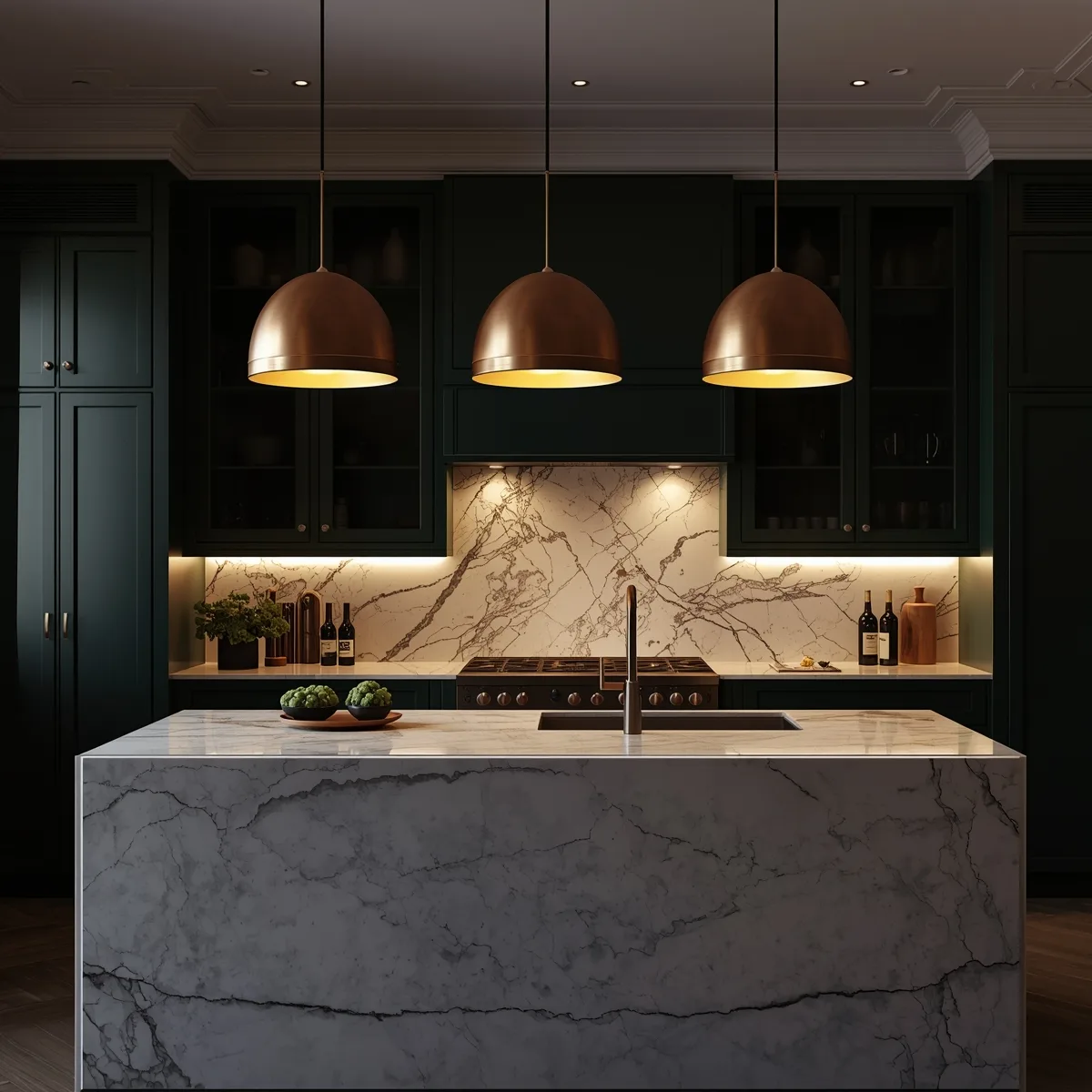
Brass & warm metal
Warm undertone brass over marble or wood: sparkle at the shade, soft pools on the surface. Pairs with black hardware when undertones agree — not when manufacturers match.
Free dimmable bulbs · Spacing template with every island set
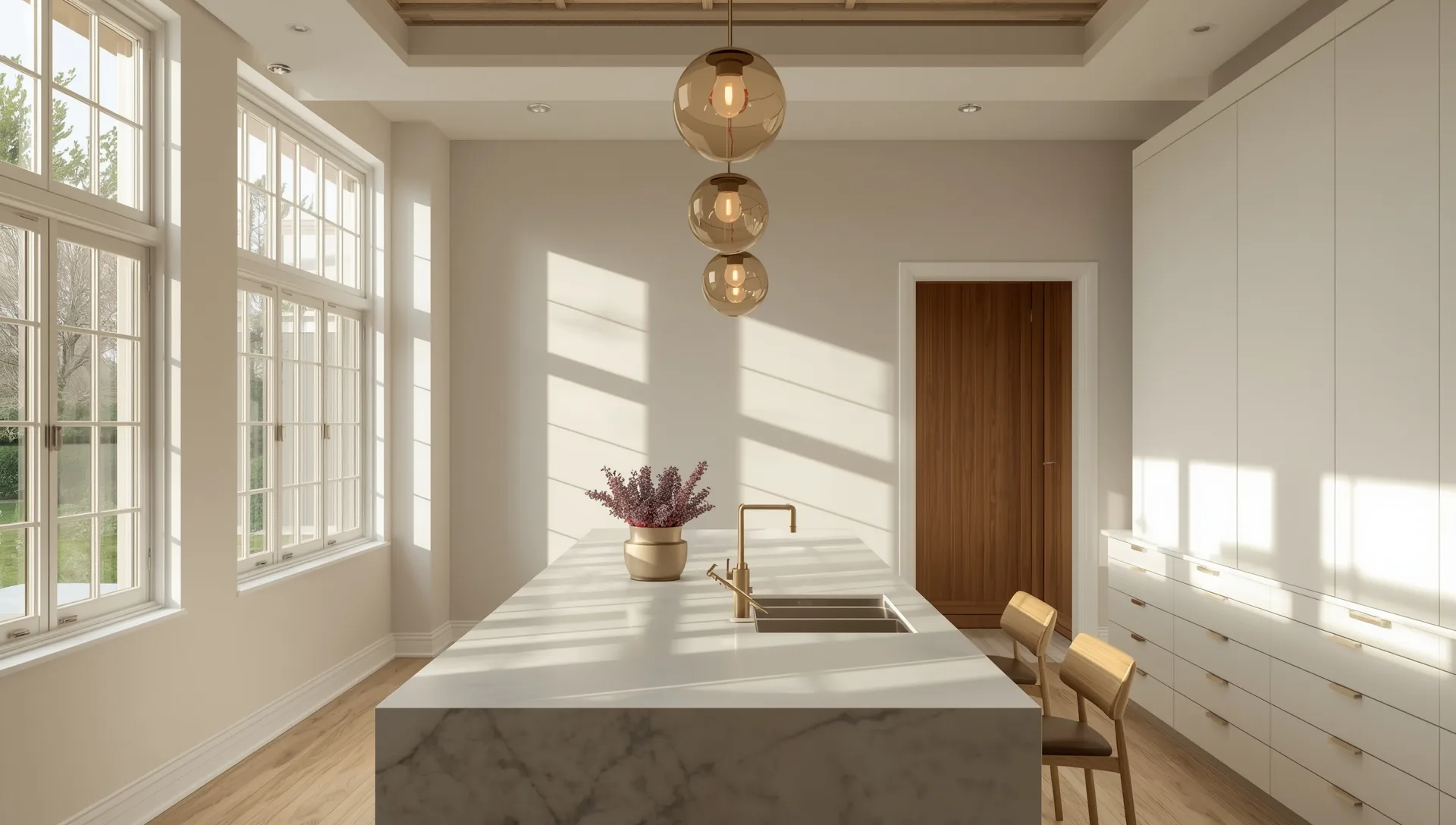
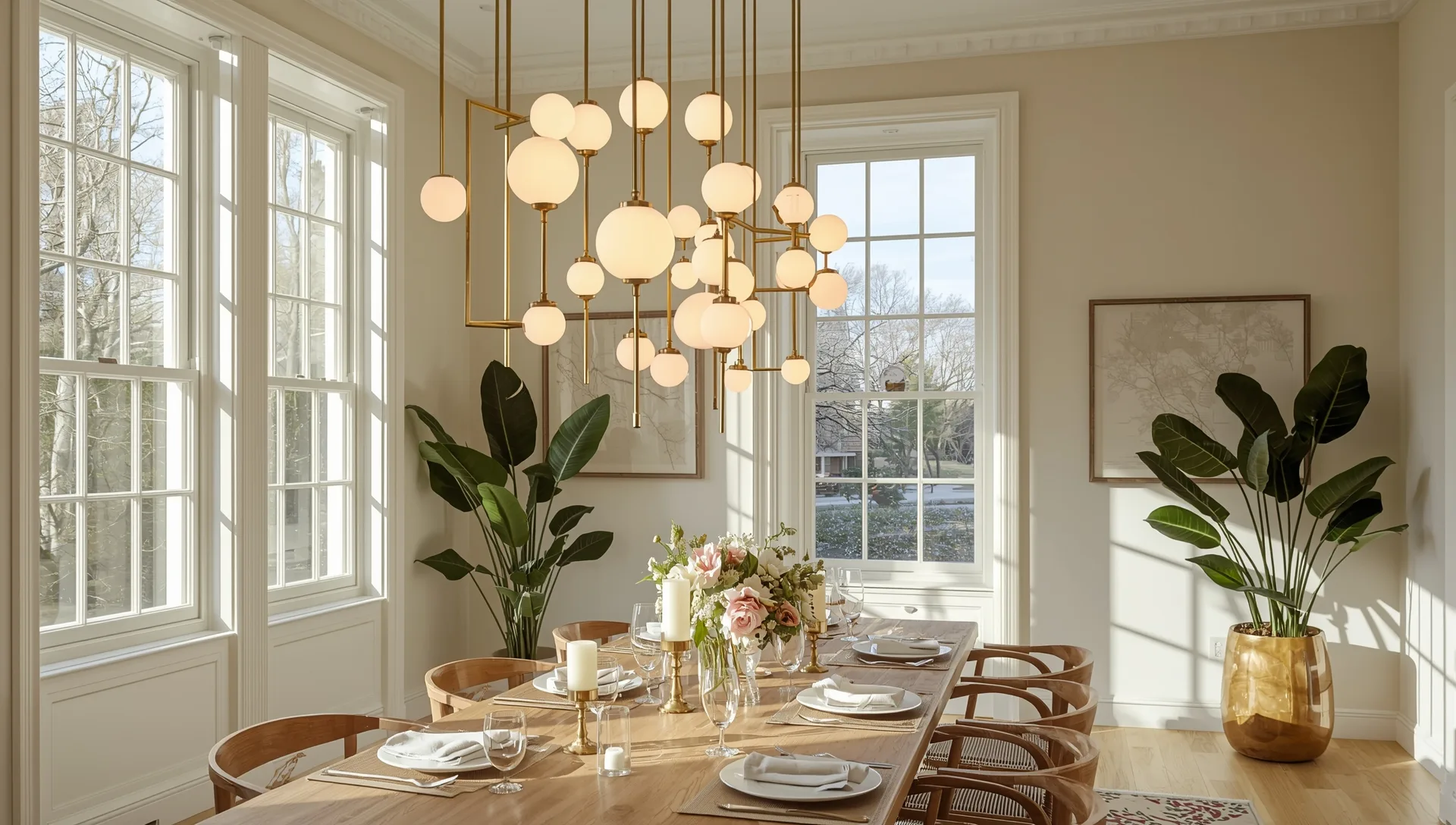
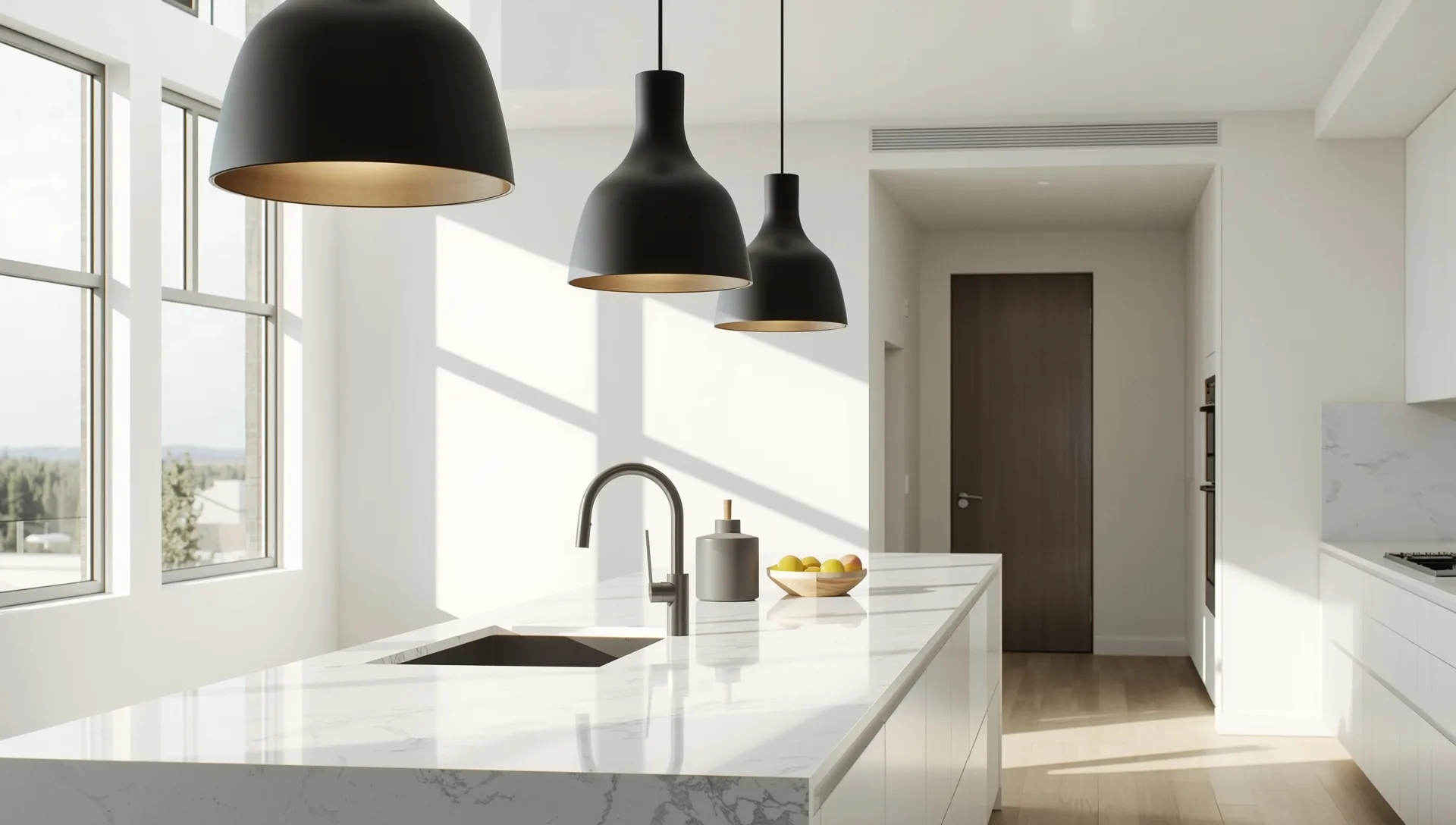
Brass fixtures · hand-blown glass · dimmable
Walk into a kitchen that feels expensive and count the design moves. The pendants over the island are usually half of it — not because they cost more than yours, but because someone hung them at the right height, spaced them on centers instead of by eye, and scaled them to the island instead of the aisle of the lighting store.
Those are learnable numbers, not taste. This page teaches all three, shows you a gallery worth stealing from, and then — only then — shows you our fixtures. Because a two-hundred-dollar pendant hung right beats a two-thousand-dollar pendant hung wrong, every single time.
01 — Layered light
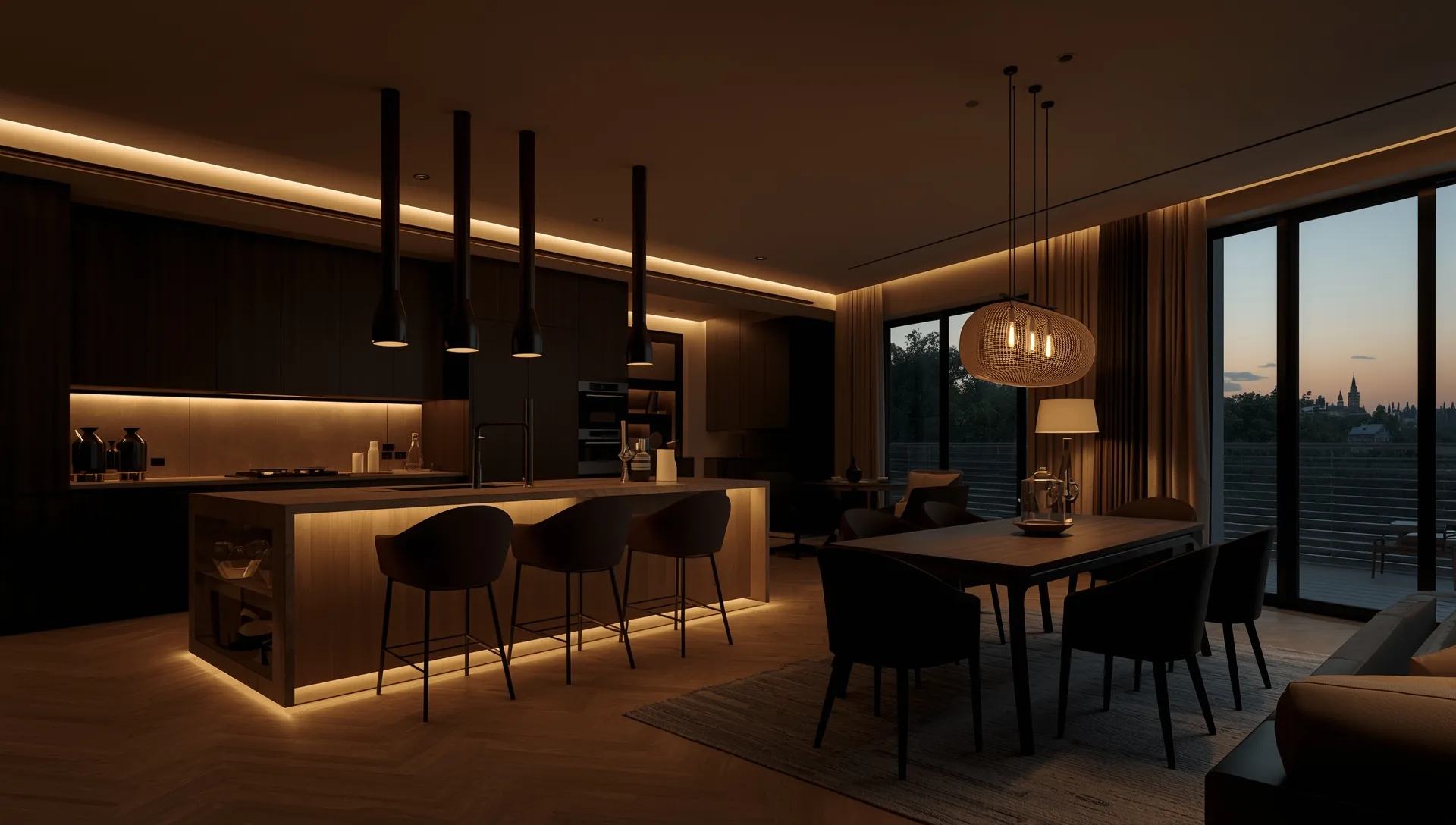
A room lit only by pendants is a room with dramatic puddles and dim corners. Pendants are the middle of a three-layer system: ambient light from ceiling fixtures or cans sets the base level, pendants carve out the zones that matter — island, table, reading chair — and accent light gives the room depth after dark.
This is also the argument for dimmers on every pendant circuit, which cost little and change everything. The same three pendants run bright for homework at the island, half for cooking, and low for the last glass of wine — three rooms for the price of one wiring decision.
Color temperature belongs in the same decision: 2700 K reads warm and domestic, 3000 K clean and slightly commercial. Mixing temperatures across one sightline is the most common invisible mistake — each fixture looks fine alone and the room feels subtly wrong together. Pick one number and buy every bulb to it.
Brightness planning rounds out the layer math: a kitchen island wants strong task-level light at full send, a dining table wants roughly half that ceiling with most evenings spent lower still. This is why we spec dimmable bulbs by default rather than as an upgrade — the fixture is permanent, but the room's jobs change by the hour.
02 — Hanging height
Over an island or counter, the working range is 75 to 90 centimeters from the surface to the bottom of the fixture. Lower than 75 and tall family members meet the shade personally; higher than 90 and the pendant stops being task lighting and becomes a ceiling ornament, casting your cutting board into your own shadow. When in doubt inside that range, go lower — hesitant-high is the amateur signature, and it's visible from the doorway.
Over a dining table, drop further: 70 to 80 centimeters above the tabletop. The fixture should float low enough to gather the table into its light and define the zone, while clearing sightlines between seated faces — you should see the person opposite, not their forehead through a shade.
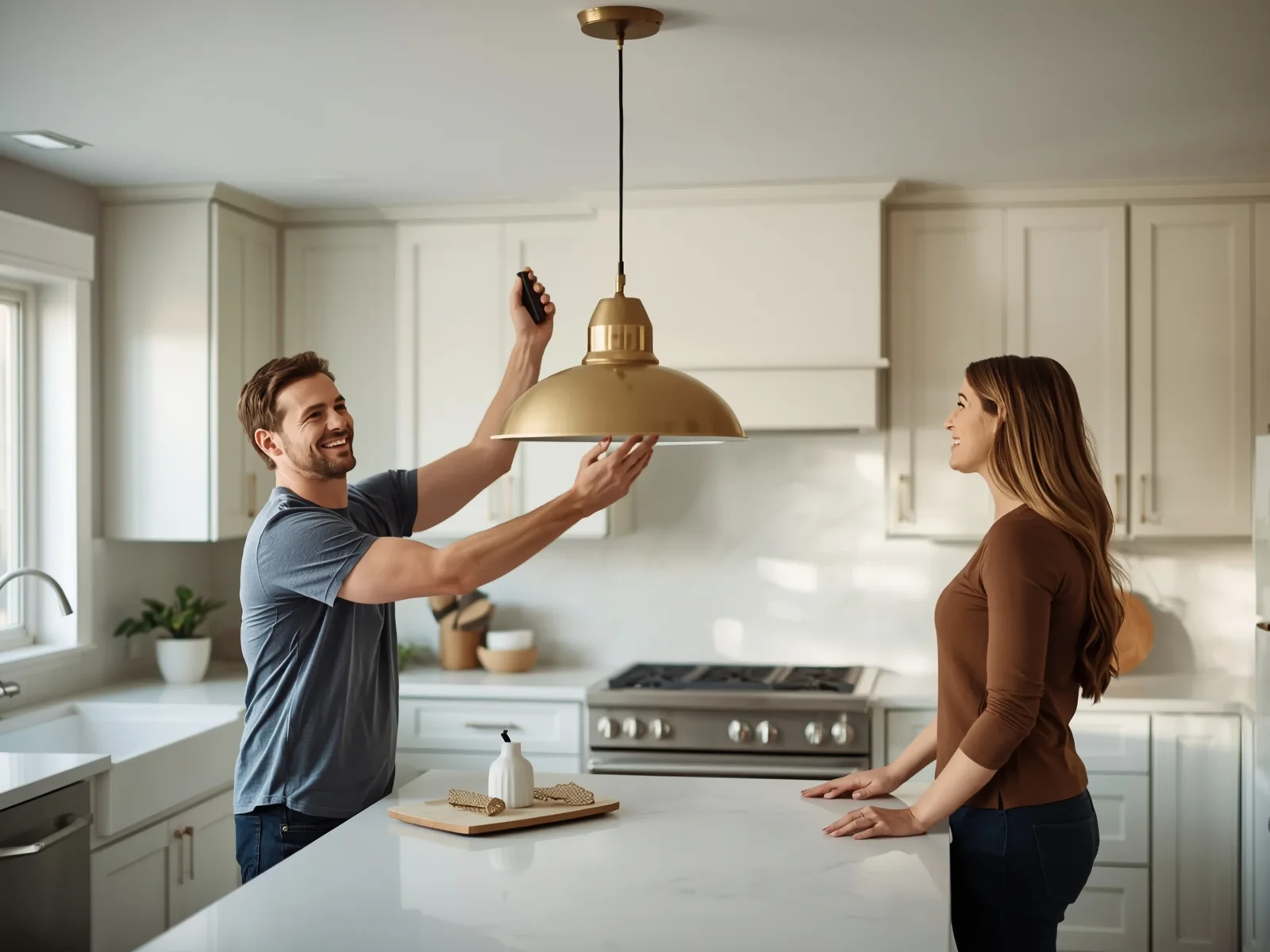
In open circulation areas — hallways, entries, beside stairs — the rule changes from surfaces to skulls: 210 centimeters of clearance from the floor, minimum. And in every case, decide the height with the fixture held in place by a patient assistant before anything is wired. Tape and a broom handle have saved more ceilings than any calculator.
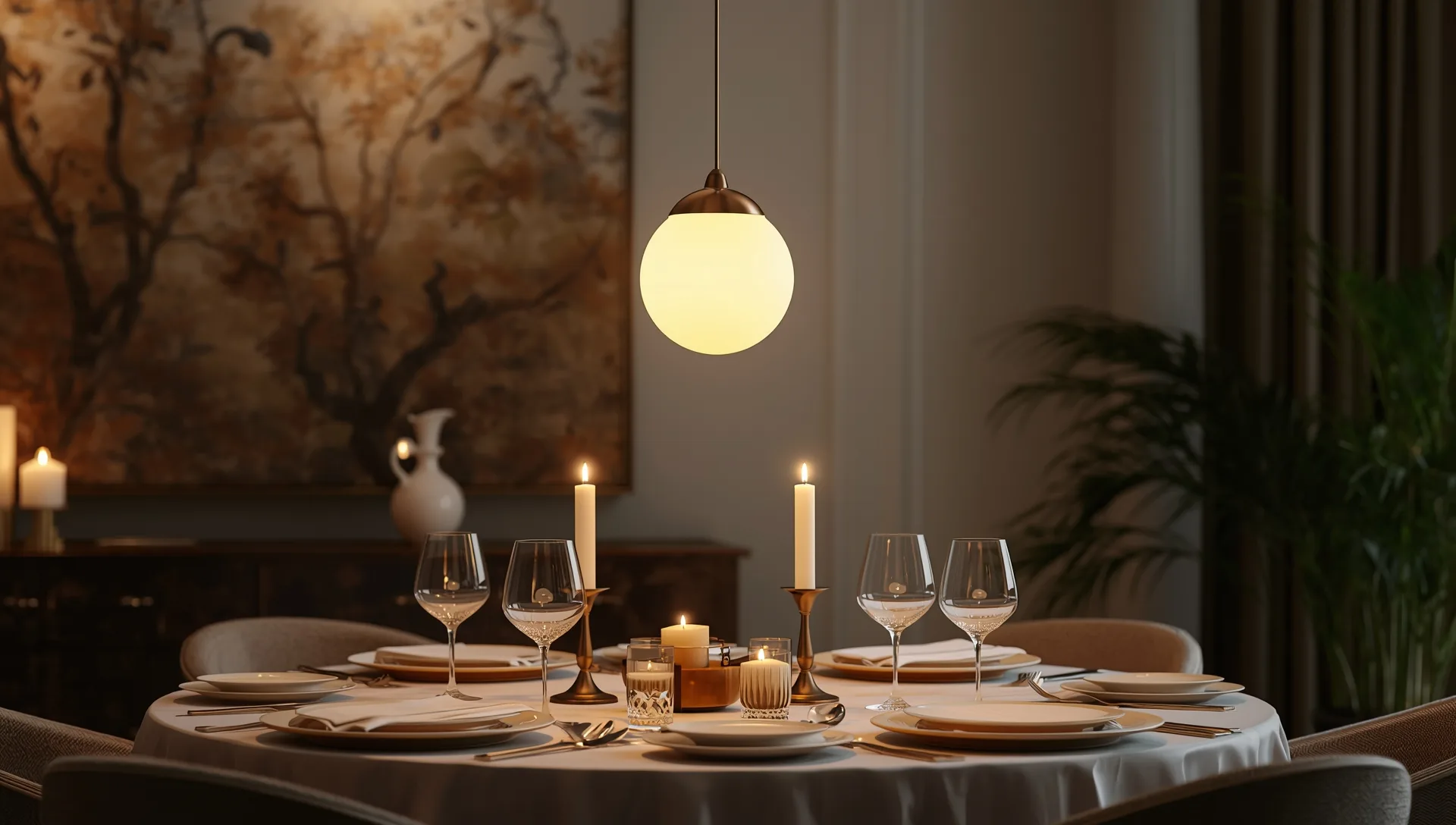
The Meridian — faces-flattering glow over the table
Our opal globe on a solid brass stem was designed for the rooms where pendants need to flatter people, not just illuminate counters. Even diffusion, warm undertone brass, and a rigid drop that stays plumb — the dining-table answer when sparkle would be unkind at breakfast.
A 30 cm opal glass globe on a solid brass stem and canopy: even faces-flattering glow, dead-plumb rigid drop that never twists, and the warm-undertone finish that plays with black or brass hardware alike. Dimmable to candlelight.
03 — Materials
Warm undertone brass over marble or wood: sparkle at the shade, soft pools on the surface. Pairs with black hardware when undertones agree — not when manufacturers match.
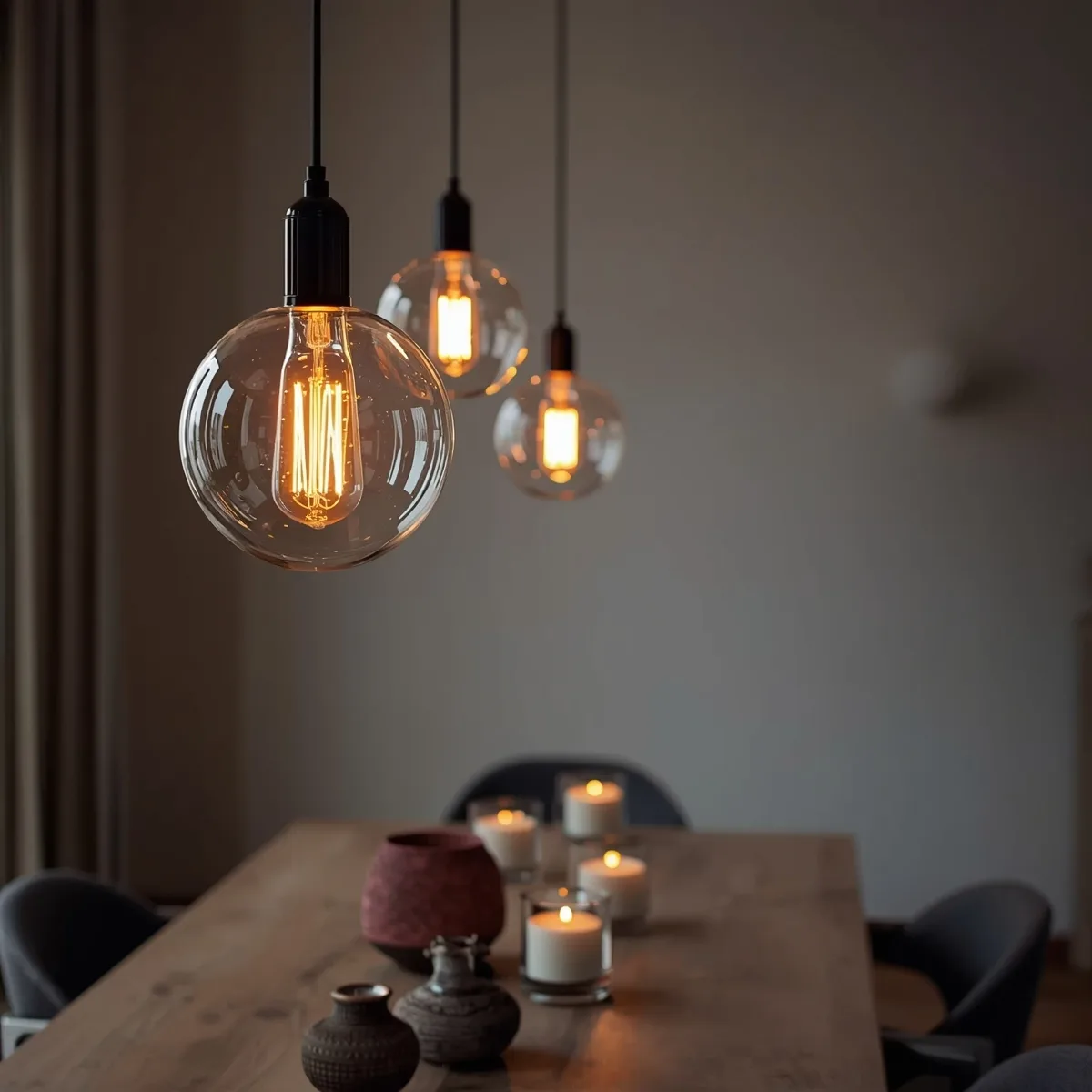
Clear globes make the filament the decoration — buy beautiful dimmable bulbs. Opal trades sparkle for even glow; the diplomatic choice over dining tables and bathroom mirrors.
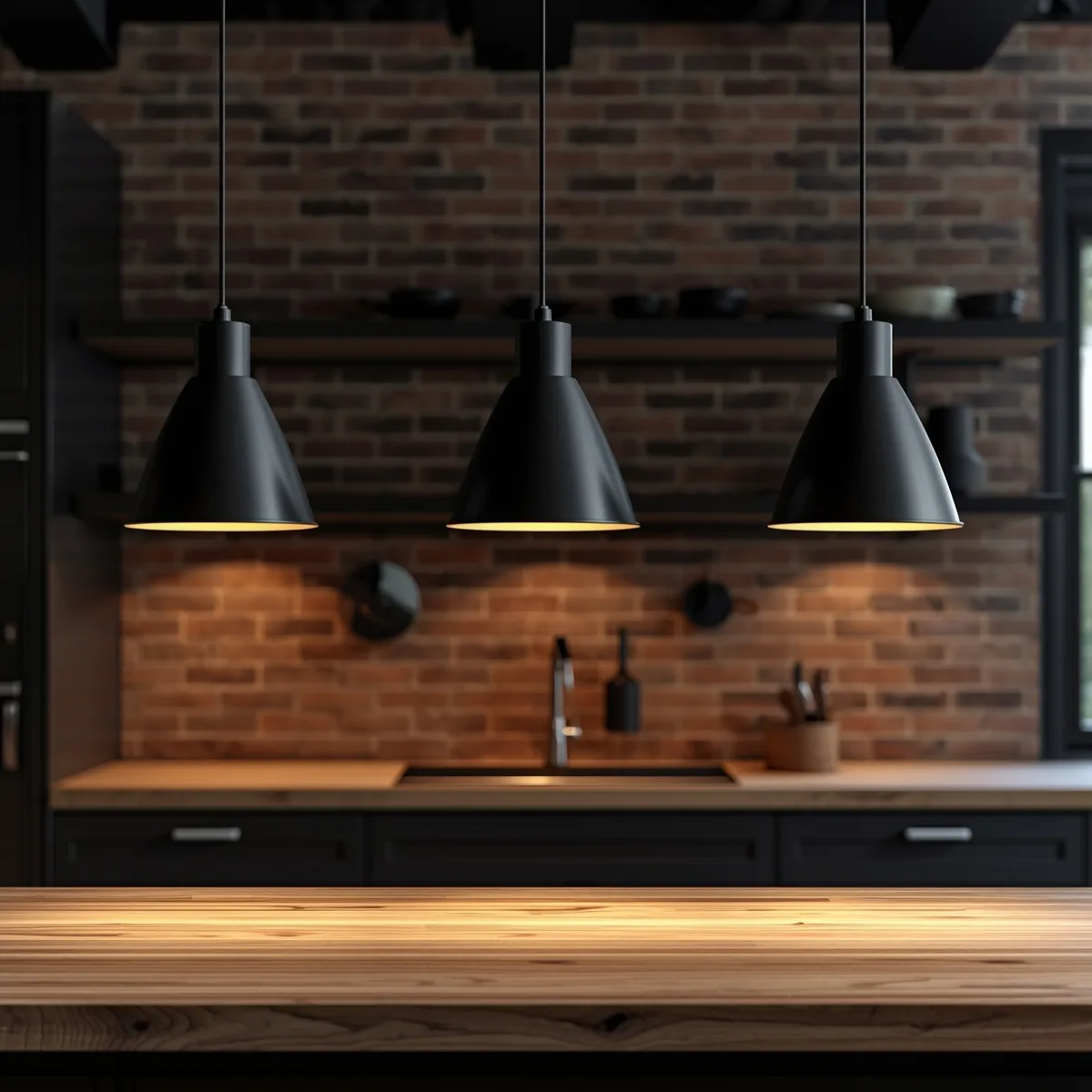
Crisp downlight in a tight cone — exactly what a work surface wants. Our Foundry Row set is three matched cones with the spacing template in the box.
04 — Rooms
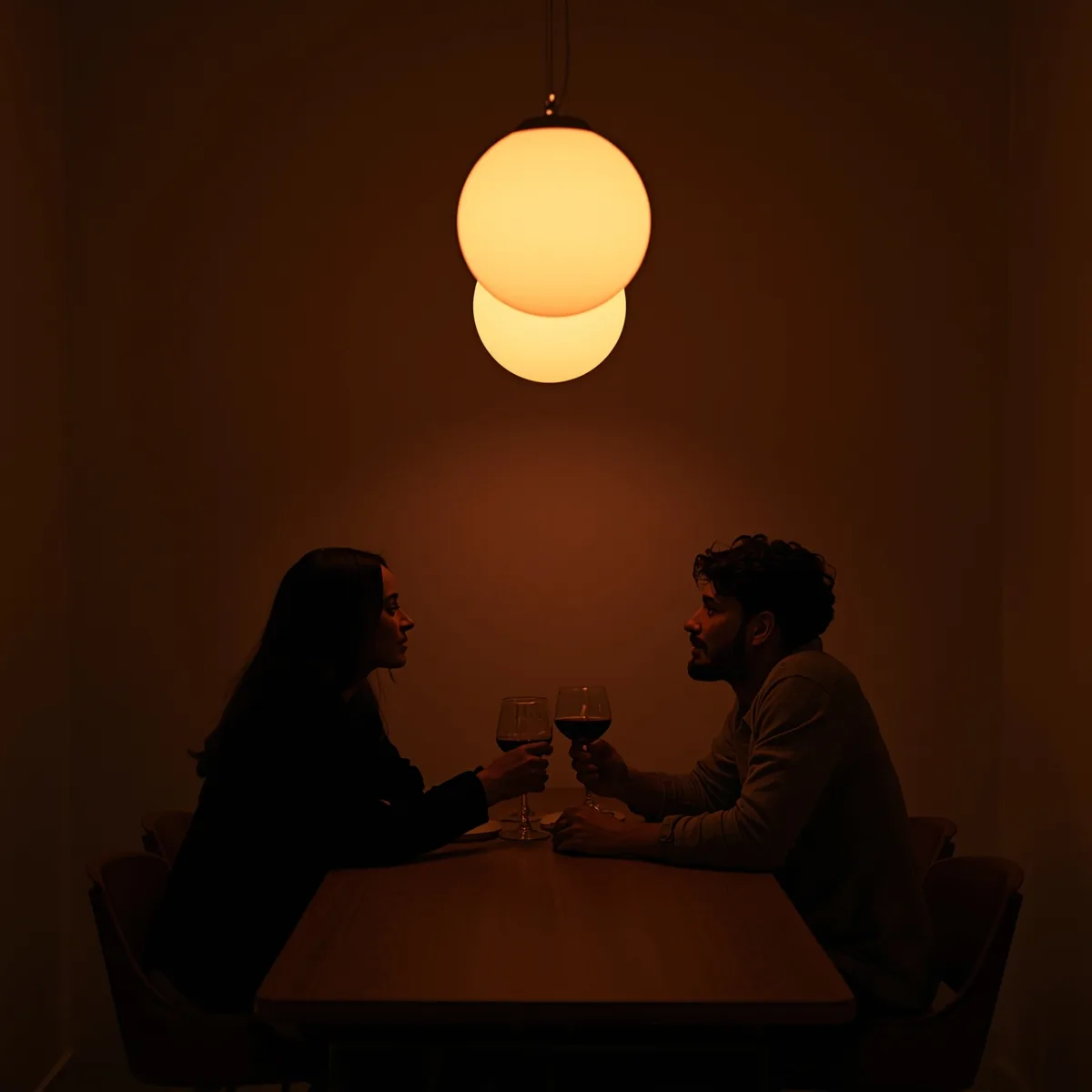
Drop 70 to 80 centimeters above the tabletop. Gather the table into the light, clear sightlines between faces. Filament bulbs and dimmers turn one fixture into three evenings.
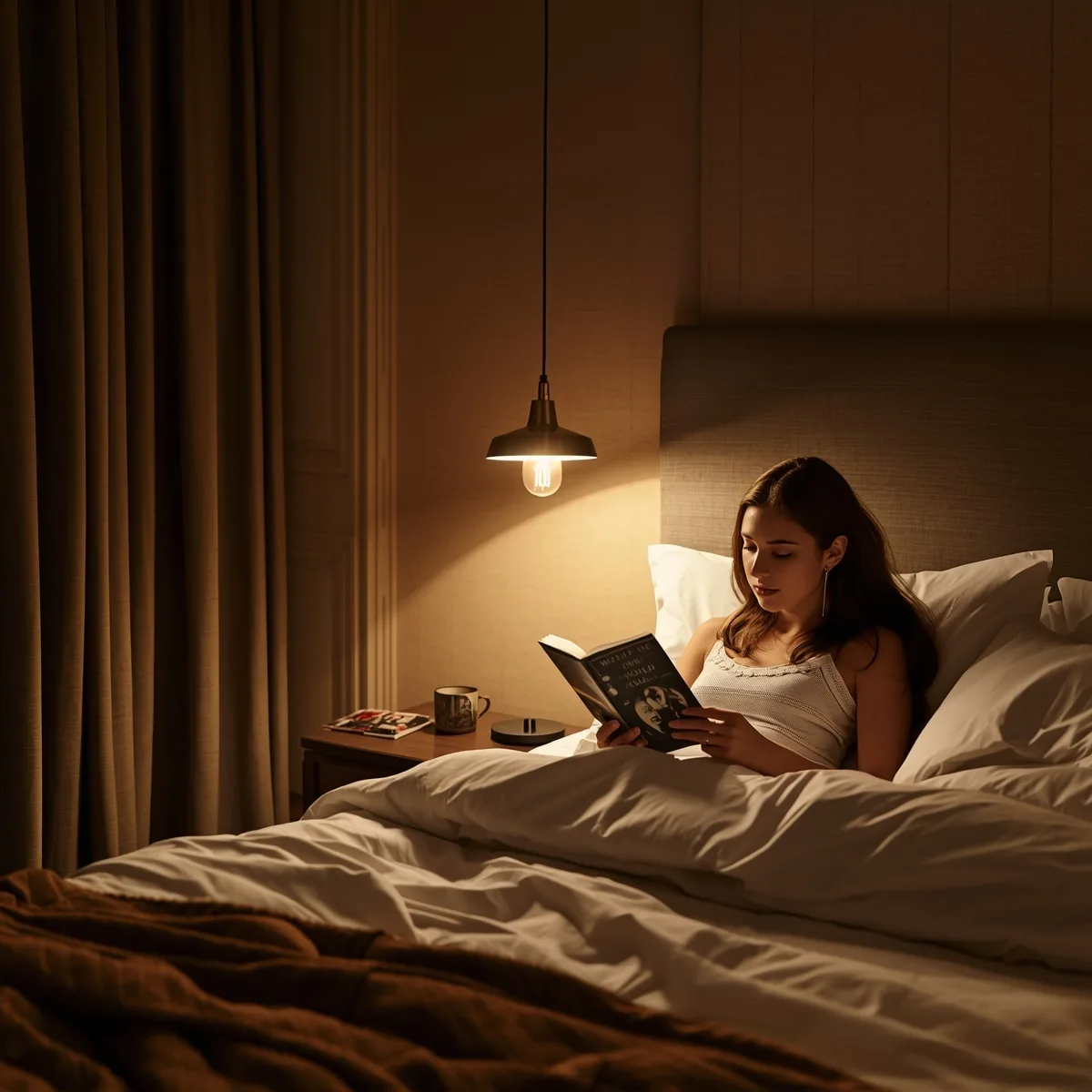
Hung at 50 to 60 centimeters above the nightstand, a pendant frees the table surface and puts light exactly where a book lives. Wire both sides on separate switches — symmetry is for photographs.
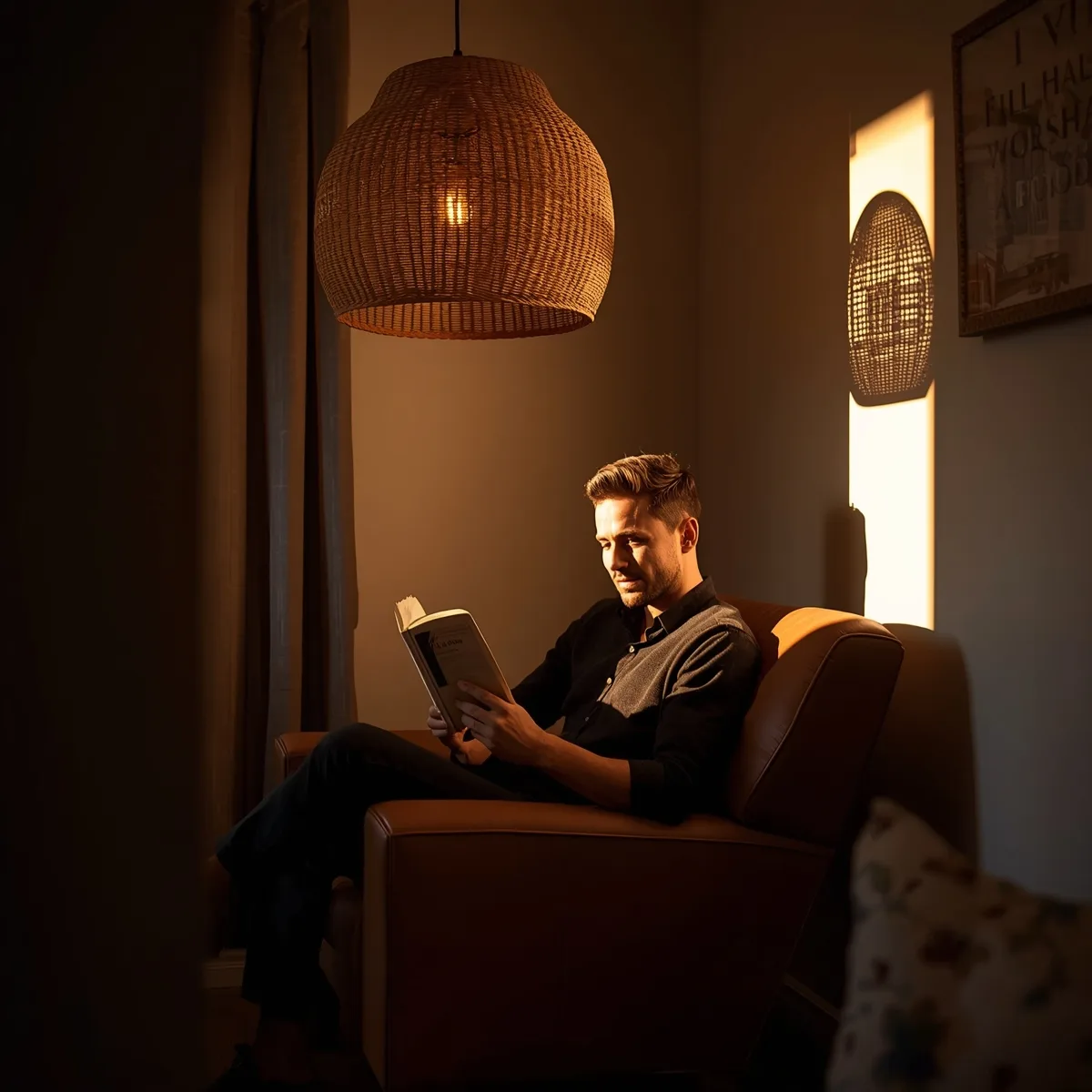
One fixture dropped low beside an armchair carves a room-within-a-room out of an open plan. Hang off the chair's shoulder, not dead center — the corner becomes a destination.
05 — Spacing & scale
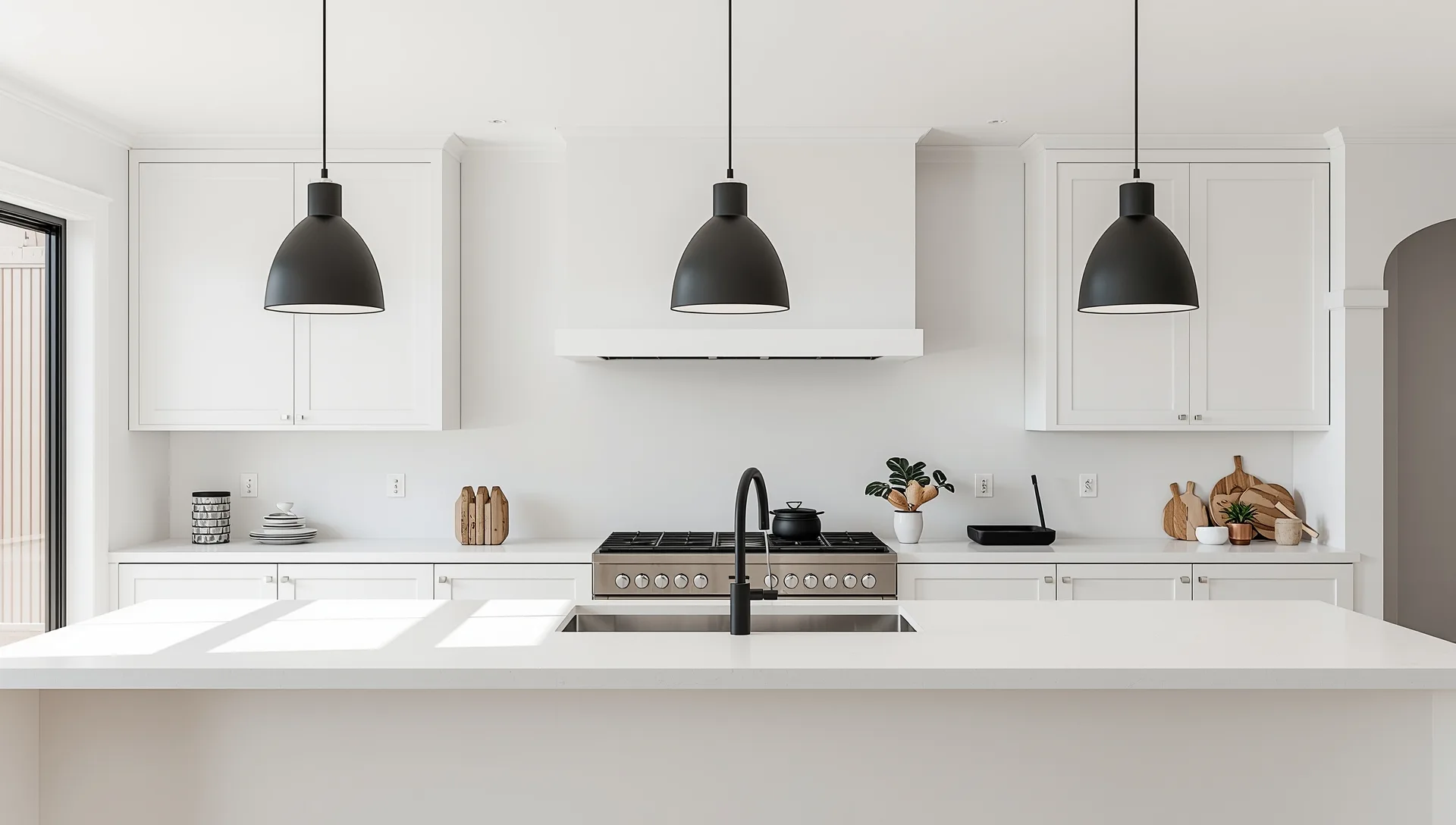
For the classic two-or-three-pendant island, work from centers, not gaps. Divide the island length by the number of pendants plus one; hang each pendant at those division points. A 240-centimeter island with three pendants gets them at 60, 120, and 180 — even light, no dark ends, no crowding at the middle.
Scale answers 'how big': over islands, the shade row should span roughly two-thirds of the island's length in total. Three small pendants on a huge island read as buttons; one oversized dome on a small island reads as a UFO event.
Odd numbers photograph better and light better — two pendants create a dark center exactly where the work happens. If your island only supports two by length, consider one linear fixture instead; it solves the middle and the spacing argument in a single canopy.
Ceiling height modifies everything: each extra half meter of ceiling wants the fixture visually heavier or the drop longer, or the pendants read as buttons floating in space.
06 — Gallery reading
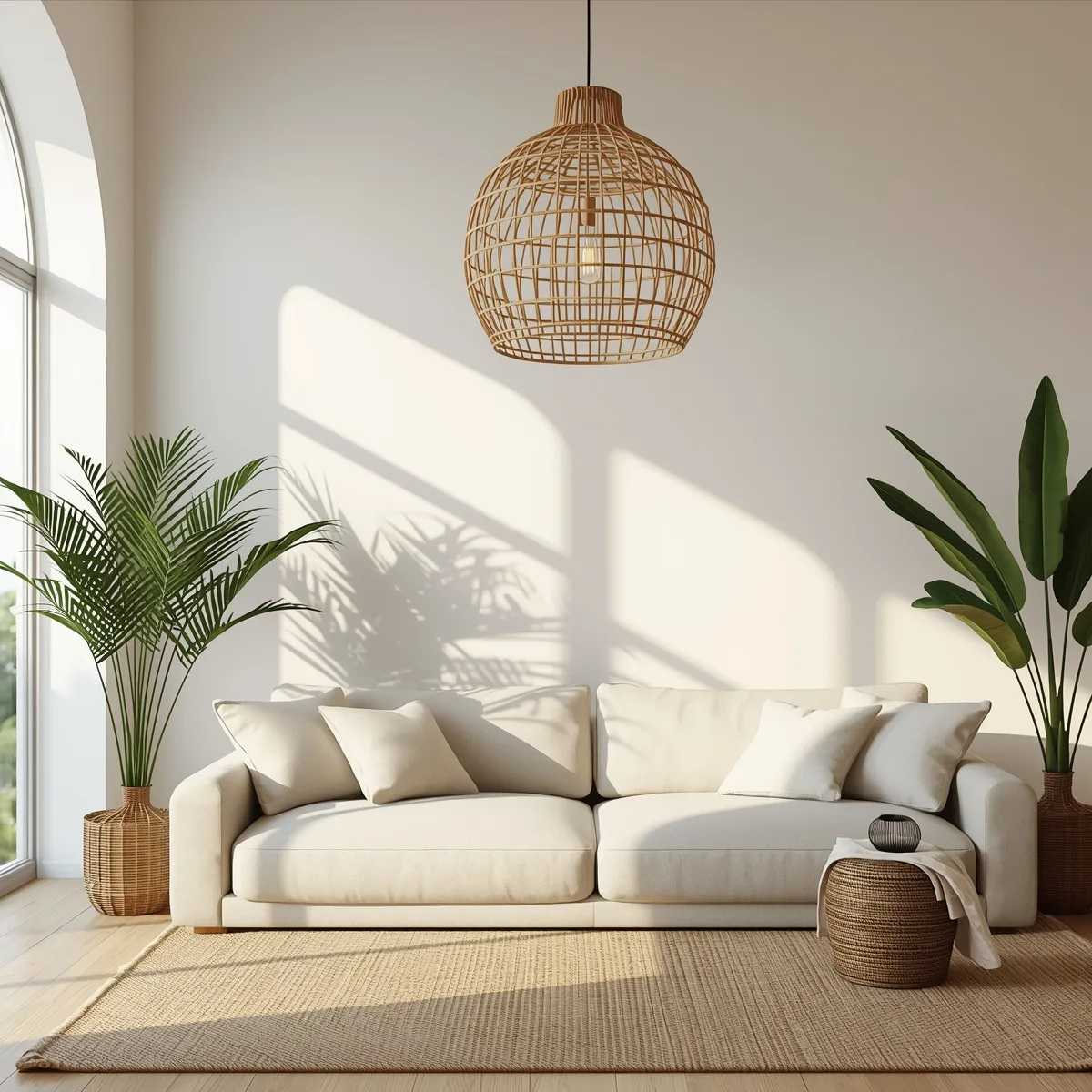
Clear glass globes give sparkle and zero shadow — the filament becomes the decoration, so buy beautiful bulbs and keep them dimmable. Opal and frosted glass trade sparkle for a soft even glow that flatters faces; it's the diplomatic choice over dining tables.
Metal shades — brass, matte black, enamel — throw all their light down in a crisp cone, which is exactly what a work surface wants and exactly what a conversation area doesn't. Woven rattan and fabric drum shades sit between: patterned, warm, directional but forgiving.
Finish coordination has one modern rule: matched undertones, not matched metals. Brass pendants over an island with black cabinet hardware works beautifully; what fails is mixing warm brass with cool chrome in the same sightline.
Check the CRI number while you're bulb shopping — 90-plus renders food, wood, and faces the way daylight does, and the few dollars it adds per bulb is the cheapest quality upgrade in this entire guide.
The Foundry Row — three cones, pre-mathed
Three matte-black spun-steel cones sold as a set with a printed spacing template — centers marked for 180 to 300 centimeter islands. Crisp task-grade downlight, matched drops, field-adjustable cord that coils in the canopy instead of looping visibly.
Three matte-black spun-steel cones sold as a set with a spacing template in the box — the island solution, pre-mathed. Crisp downlight for the work surface, matched drops, one decision instead of nine.
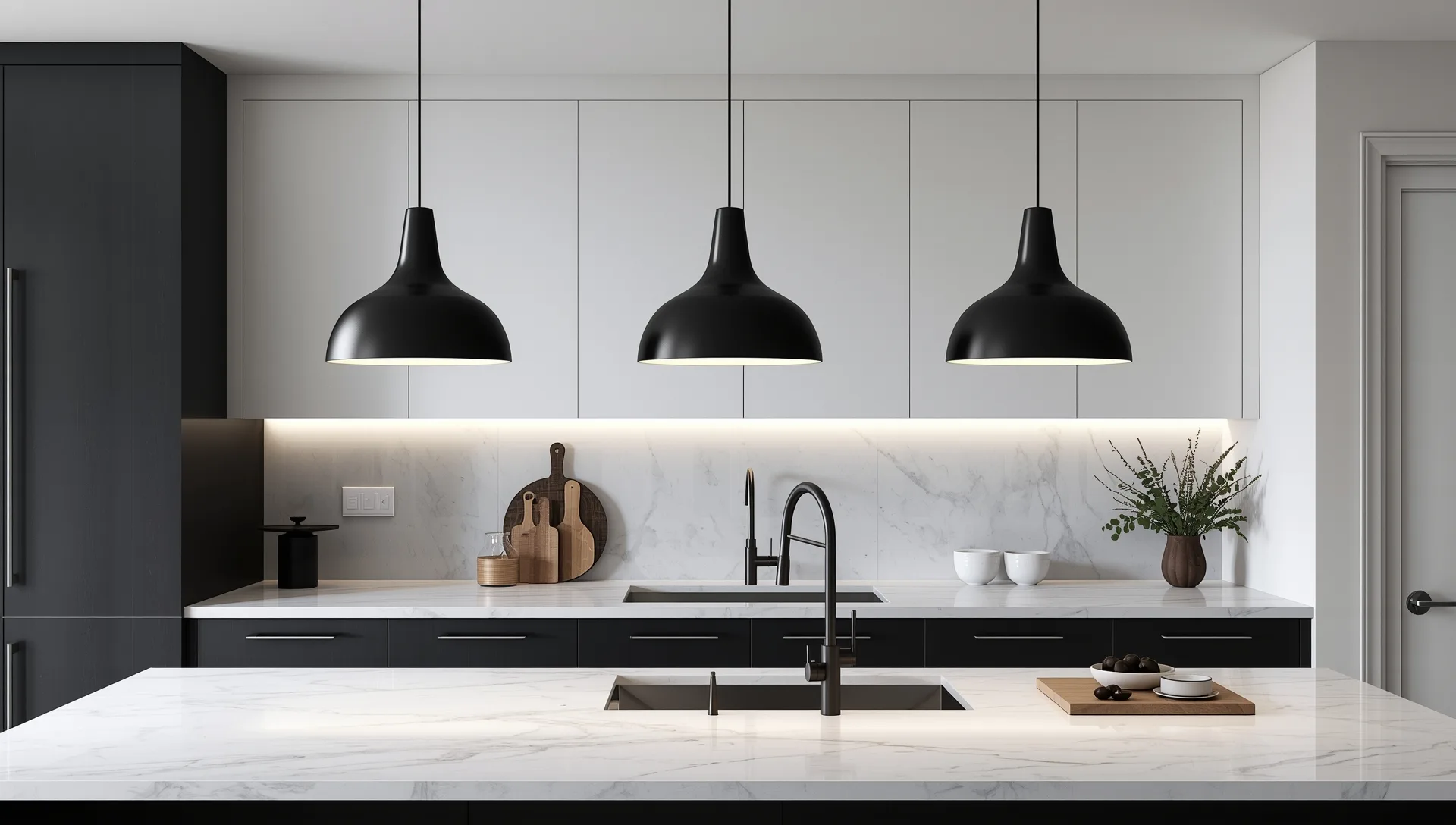
Every island set ships with centers marked for your island length. Measure once, hang once, no arguments at the ladder.
One temperature per sightline, CRI 90-plus, included with every fixture unless you specify otherwise.
We publish max drop, sloped-ceiling compatibility, and when to call the electrician. Swapping onto an existing box is DIY; new boxes are not.
07 — Studio
PendantLightia was started by two people who kept getting asked the same question at dinner parties: 'why does your kitchen look like that?' The answer was never the fixtures — it was the numbers. Height, spacing, scale, temperature.
We sell a tight collection we'd hang in our own homes, ship every island set with the spacing template, and publish the design math free because a well-hung pendant is our best advertisement, whoever made it.
Email us island length, ceiling height, and a photo of the room — we sketch pendant centers for free, whether or not you buy our fixtures. The spacing template in every island set exists because we got tired of watching beautiful pendants hung like afterthoughts.
08 — Questions
Choosing pendants is a wiring decision disguised as a style decision. These answers come from the same place as the rest of this page: measurable height, honest spacing, and strong opinions about bulb temperature.
75 to 90 centimeters from countertop to the fixture's lowest point, and inside that range err low — it looks deliberate and lights the work. Only push toward 90 if someone tall works at the island daily or the shades are visually heavy.
Three, if the length allows 60 centimeters between shade edges — odd numbers light the center where the work happens and read better from the room. If only two fit, consider one linear fixture instead of an even pair.
A like-for-like swap on an existing box, with the breaker off and a voltage tester in hand — reasonably, yes. New or relocated boxes, aluminum wiring, or anything mysterious in the ceiling: electrician, no debate.
Pick one temperature for every fixture in a sightline: 2700 K for warm and domestic, 3000 K for cleaner and brighter. Mixing them is the invisible mistake that makes rooms feel off.
Cord-hung pendants with a swivel canopy or our sloped-ceiling adapter — both listed per product. Measure the vertical drop from the box to your target height before ordering; slopes eat cord length faster than intuition suggests.
Undertone-wise, yes by design: our brass is warm and unlacquered-toned, our black is a true soft matte. The modern rule is matched undertones, not matched manufacturers.
Height ranges, the island spacing formula, the scale shorthand, and a printable worksheet — everything on this page in a form you can take up the ladder.